
Why Does My Car Pull Sideways When I Drive?
A car that suddenly moves toward one side of the road makes every drive more stressful. If you are asking, “why does my car pull sideways,” the answer could be as simple as tire pressure or as urgent as a brake or steering problem. Either way, a vehicle should track straight on a level road with a light, steady grip on the wheel. If it does not, it is time to pay attention.
A pull is more than an annoyance. It can wear out tires early, make wet-road driving less predictable, and force you to constantly correct the steering wheel. The sooner you find the cause, the better chance you have of avoiding a larger repair.
First, make sure it is really a pull
Roads are often built with a slight slope so rainwater can drain toward the curb. On many streets, that can cause a mild drift to the right. Wind, road grooves, and uneven pavement can also move the car around a little.
A real pull is stronger and more consistent. On a flat, lightly traveled road, carefully loosen your grip on the wheel while staying alert and in control. If the car quickly heads left or right, or you must keep steady pressure on the steering wheel to travel straight, there is likely a mechanical issue.
Pay attention to when it happens. Does the vehicle pull all the time, only during braking, after hitting a pothole, or at highway speed? That detail helps narrow down the repair.
Why does my car pull sideways? Common causes
Uneven or low tire pressure
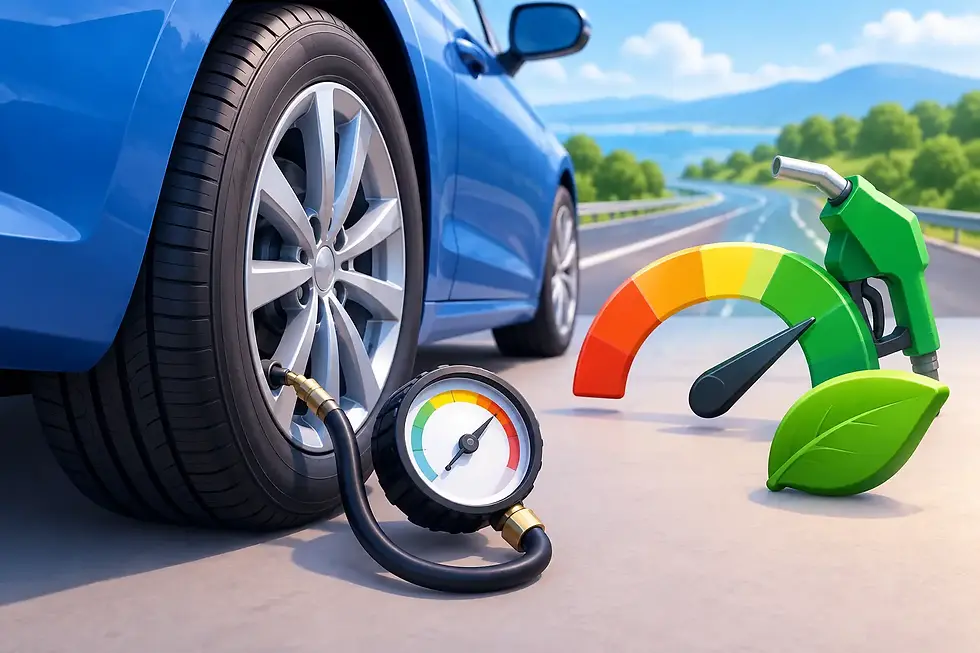
Tire pressure is the first thing to check because it is quick, inexpensive, and easy to overlook. A tire that is low on air has more rolling resistance and can make the vehicle move toward that side. A major pressure difference from one front tire to the other is especially likely to affect how the car tracks.
Check pressure when the tires are cold and use the pressure listed on the driver-side door placard, not the maximum number molded into the tire sidewall. If one tire keeps losing air, do not just refill it and move on. A nail, leaking valve stem, bent wheel, or damaged tire may be the reason.
Uneven tire wear or a damaged tire
Tires can look acceptable at a glance and still cause a pull. Uneven tread wear, separated internal belts, a bulge in the sidewall, or a tire with a different construction than the others can affect handling. You may also feel a vibration, hear extra road noise, or notice that the pull changes as speed increases.
Tire rotation can sometimes reveal the problem. If the car begins pulling in the opposite direction after the front tires are moved, one of the tires may be causing it. That does not automatically mean every tire needs replacement, but a technician should inspect the full set for safety and matching tread condition.
Wheel alignment problems
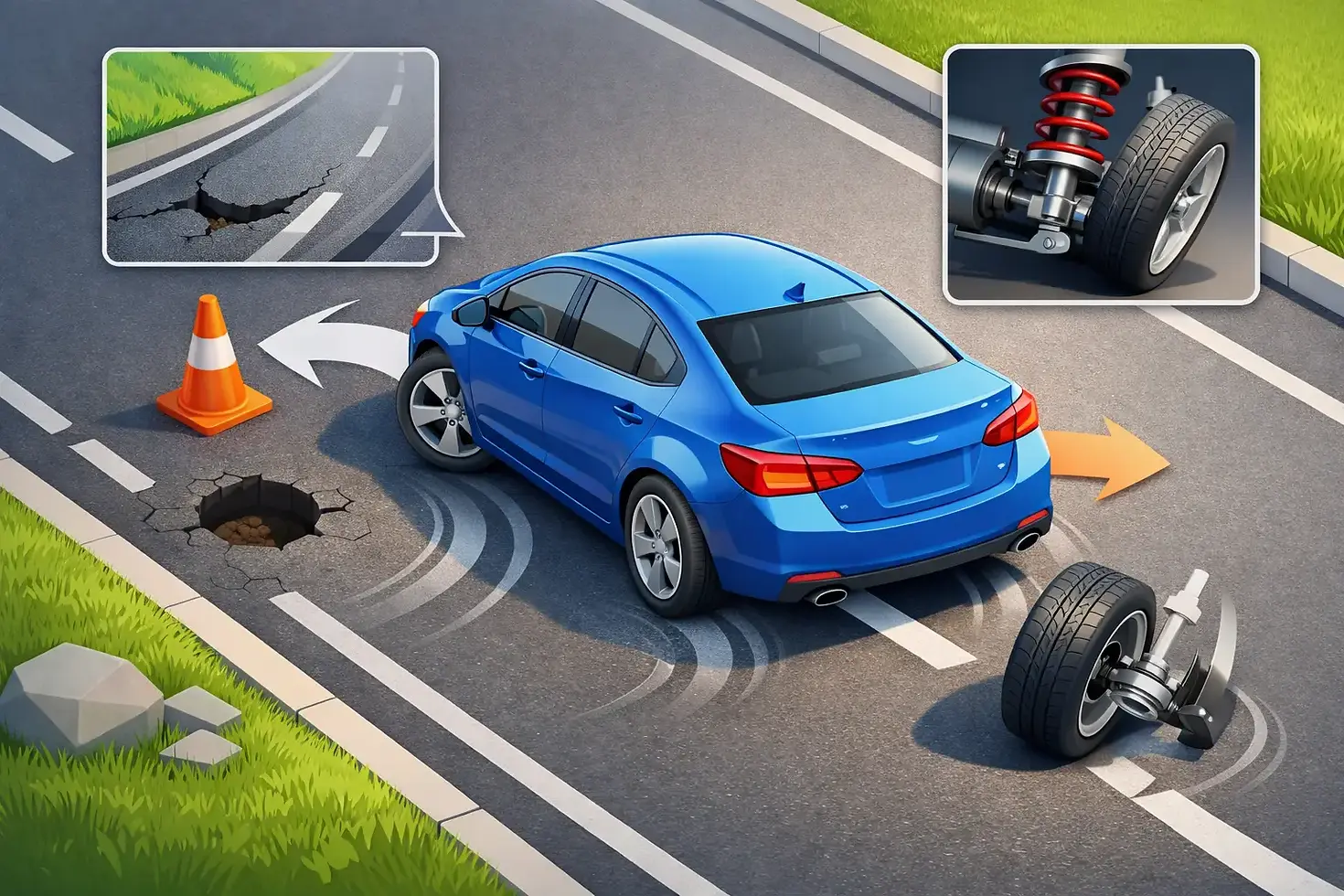
Alignment is one of the most common answers when a car pulls sideways. Alignment angles determine where the tires point and how they meet the road. A hard pothole, curb strike, road debris, worn steering components, or suspension impact can knock those angles out of specification.
An alignment problem often comes with uneven tire wear. You might see one edge of a tire wearing faster than the rest, a crooked steering wheel while driving straight, or a pull that gets worse over time. Alignment service corrects the angles, but it is only effective if the tires, steering, and suspension parts are in good condition first.
A sticking brake caliper
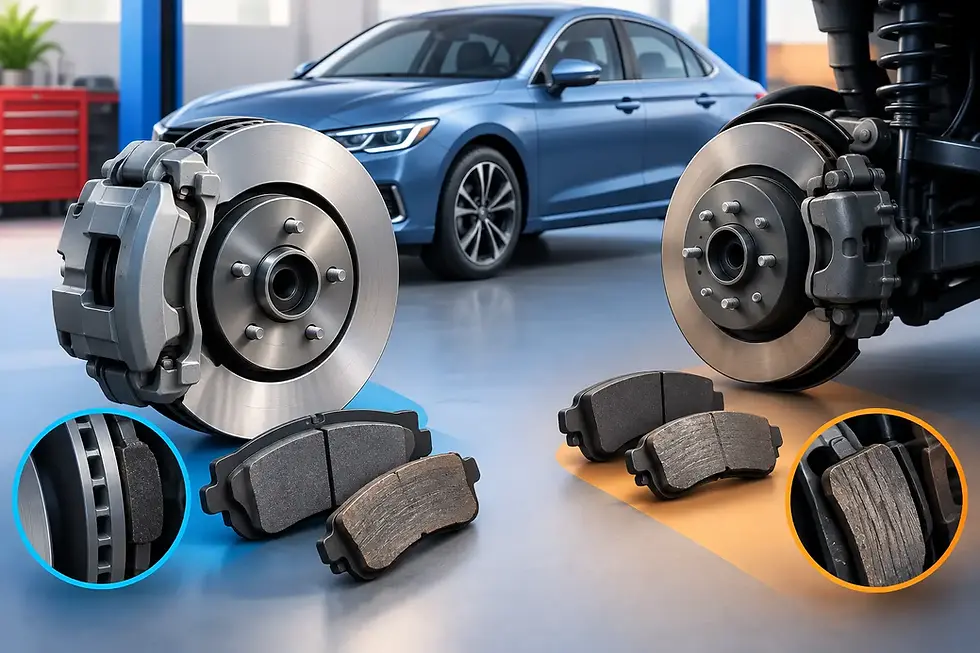
If the car pulls mainly when braking, a brake issue needs attention soon. A sticking caliper, seized slide pin, contaminated brake pad, or restricted brake hose can cause one wheel to brake harder than the other. The vehicle may tug sharply left or right when you press the pedal.
Other warning signs include a burning smell near a wheel, a wheel that feels unusually hot after a short drive, reduced fuel economy, brake noise, or the car pulling even when you are not touching the brake pedal. Do not keep driving to “see if it clears up.” A dragging brake can damage rotors, pads, and calipers and can create a serious safety risk.
Worn steering or suspension parts
Your steering and suspension system does more than make the ride comfortable. It keeps the tires planted correctly and helps the vehicle respond predictably. Worn ball joints, tie rods, control arm bushings, wheel bearings, struts, or shocks can all contribute to pulling, wandering, clunking, or unstable handling.
This type of problem is often more noticeable on rough roads, while turning, or during braking. It may also make the car feel loose, as if it needs frequent steering corrections. Parts can wear gradually, so many drivers adapt to the change without realizing how much handling has declined.
A bent wheel or previous collision damage
A bent wheel can cause vibration and may contribute to an off-center feel. More significant pulls can come from damage after a collision, curb impact, or deep pothole. In some cases, the suspension or body mounting points may be bent enough that a normal alignment cannot bring the vehicle back into specification.
That is why a proper inspection matters. The right repair is not always simply “do an alignment.” A trustworthy shop checks for the reason alignment changed in the first place.
What to do when your car starts pulling
Start with a visual check. Look for a noticeably low tire, a damaged sidewall, uneven tread, or anything stuck in the tire. Check all four tire pressures and set them to the vehicle manufacturer’s recommended cold pressure. If you find a tire that is very low, refill it, but arrange for it to be inspected if the issue returns.
Next, think about the symptoms. A constant pull that began after a pothole points more toward a tire, wheel, alignment, or suspension issue. A pull that happens under braking points more toward brakes, although worn suspension parts can make braking pulls worse. If the steering wheel shakes, the vehicle wanders, you smell something burning, or a tire has a bulge, skip the guesswork and have it checked before a longer drive.
Avoid trying to correct a pull by constantly holding the wheel tighter. That may keep the car moving straight for the moment, but it does not solve the problem and can hide how quickly the condition is worsening.
When it is not safe to wait
Some pulls are mild enough to schedule within the next few days. Others should be handled immediately. Do not delay service if the vehicle jerks hard to one side, pulls sharply while braking, has a hot wheel or burning odor, shows a damaged tire, or feels difficult to control at highway speed.
A tire that is losing air quickly should also be treated as urgent. Driving on an underinflated tire can damage it internally, even if it looks normal after air is added. Likewise, a brake caliper that is sticking can overheat the brake system and lead to a much more expensive repair.
What a proper inspection should include
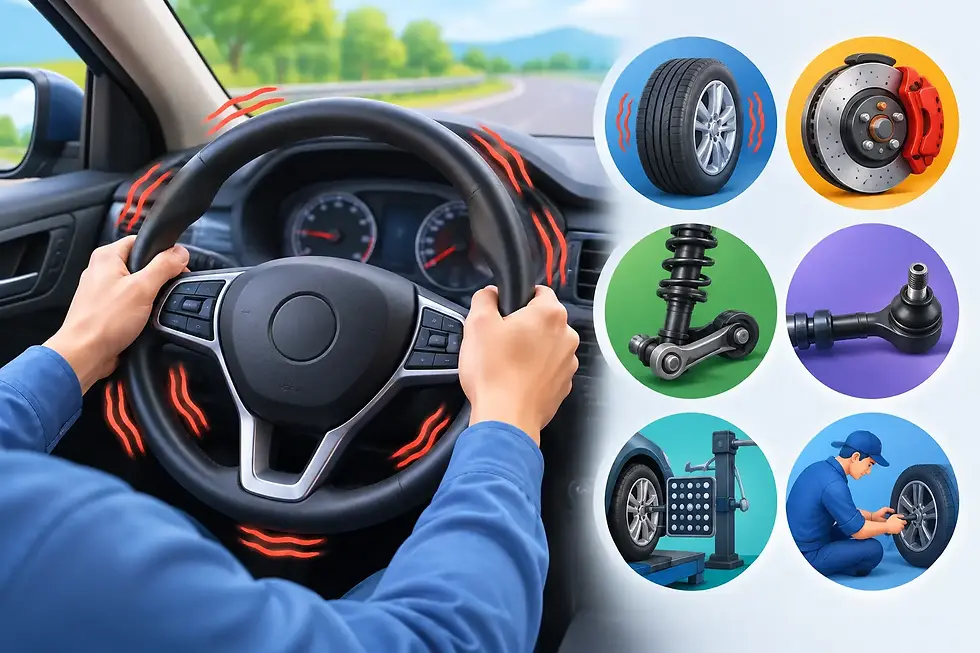
A good diagnosis starts with a road test and a conversation about when the pull occurs. From there, the technician should check tire pressure, tread wear, tire condition, wheel damage, brake operation, steering play, suspension components, and alignment readings.
The repair depends on what is found. Sometimes the answer is a tire repair, rotation, or replacement. Sometimes it is an alignment after worn parts are replaced. If the pull is brake-related, the affected caliper, hose, pads, or rotors may need service. The goal is to fix the source of the problem, not just make the steering wheel feel straighter for a week.
For Bedford and DFW drivers, JD Garage Auto Repair & Tires can inspect the tires, brakes, alignment, steering, and suspension systems in one place. If getting to the shop during the day is difficult, after-hours drop-off and pick-up options can help take some pressure off your schedule.
Your car should not require a constant fight with the steering wheel. A quick inspection now can protect your tires, improve braking confidence, and make the next drive feel the way it should: steady, controlled, and safe.


Comments