


Top Causes of Steering Wheel Shake and What to Do
A steering wheel that shakes can turn an ordinary drive down 183 or 121 into a warning sign you cannot ignore. The top causes of steering wheel shake range from a simple tire balance issue to worn brakes or suspension parts. The speed, timing, and feel of the vibration give a technician useful clues, but a proper inspection is the safest way to identify the real problem.
A light vibration may seem manageable at first. Still, shaking can wear tires faster, affect your stopping distance, and make a minor repair more expensive if it is left alone. Here is what your vehicle may be trying to tell you.
Top Causes of Steering Wheel Shake
Tires that are out of balance
An out-of-balance tire is one of the most common reasons a steering wheel begins to shake. Tires are balanced with small weights when they are installed. If a weight falls off, a tire wears unevenly, or mud and debris build up inside a wheel, the tire can rotate unevenly.
This problem usually shows up at highway speeds, often around 50 to 70 mph. You may feel the steering wheel vibrate more as you accelerate, then notice it lessen when you slow down. A tire balance service can often correct it, but the technician should also check for tire damage and bent wheels before assuming balance is the only issue.
Uneven, damaged, or worn tires
Tires do more than keep the vehicle moving. They are the only part of your car that contacts the road, so irregular wear can quickly travel up through the steering wheel. Cupped tread, separated belts, flat spots, bulges, and low tread can all create a shake.
A tire with an internal belt separation may look nearly normal from the outside, yet it can cause a strong vibration. Do not keep driving on a tire with a visible bulge, exposed cords, or a suspected separation. It can fail without much warning.
Uneven tire wear is also a clue. Wear on one edge may point to an alignment concern, while scalloped or cupped wear can be tied to weak shocks, struts, or worn suspension components. Replacing the tire without addressing the cause can leave you with the same problem again.
Bent wheel or wheel damage
A hard pothole, curb strike, or road debris can bend a wheel. Even a slight bend may not be obvious while the car is parked, but it can create a noticeable wobble at speed. Alloy wheels can crack as well, particularly after a severe impact.
Texas roads can be tough on wheels, especially after construction zones, storms, or a surprise pothole. If the shake started immediately after hitting something, let a shop inspect the wheel, tire, and suspension. A bent wheel may sometimes be repaired, but a cracked or badly damaged wheel should be replaced for safety.
Warped brake rotors or brake problems
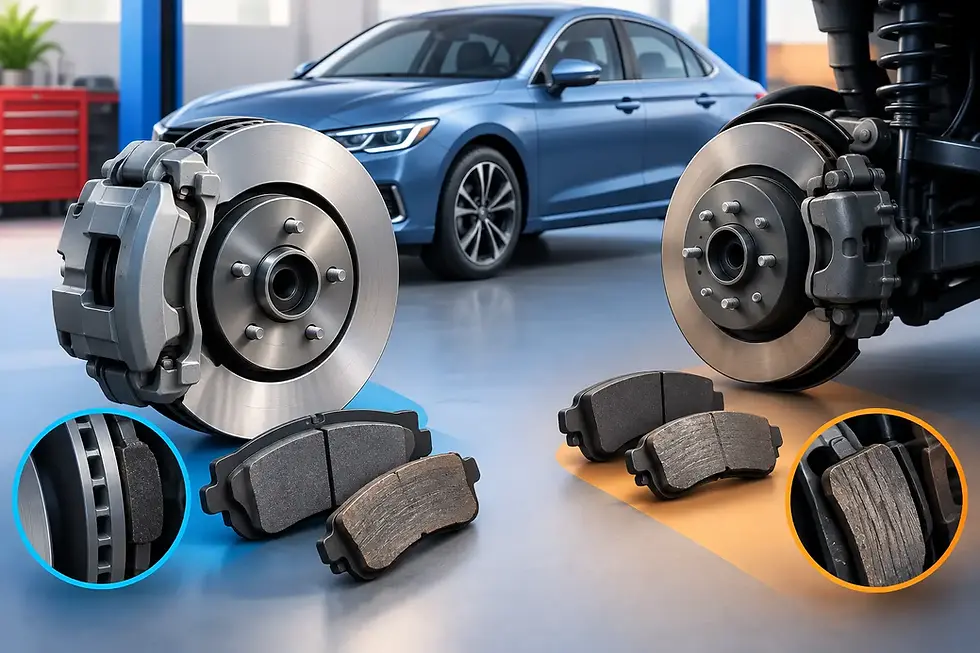
If the steering wheel mainly shakes when you press the brake pedal, the brakes deserve attention first. Many drivers call this warped rotors, though the issue can also involve uneven rotor thickness, heat spots, rust buildup, or a brake caliper that is not releasing correctly.
You may also notice a pulsing brake pedal, squealing, a burning smell, or the vehicle pulling to one side when braking. These symptoms should not wait. Brake vibration can reduce control during a hard stop, and continued driving can damage pads, rotors, calipers, and other parts.
Brake rotors cannot always be resurfaced. It depends on their thickness, condition, and the manufacturer’s specifications. A complete brake inspection helps determine whether resurfacing or replacement makes more sense.
Wheel alignment issues
An alignment problem does not always cause steering wheel shake by itself, but it often contributes to the tire wear that does. Your alignment can be knocked out by potholes, curb contact, worn steering parts, or normal driving over time.
Common signs include a steering wheel that is off-center, a vehicle that drifts or pulls, and tires wearing faster on the inside or outside edge. An alignment should be performed only after worn or loose steering and suspension parts are identified. Aligning a vehicle with failing components is not a lasting fix.
Worn steering and suspension components
Your vehicle’s steering and suspension system keeps the tires pointed where they need to go. Tie rods, ball joints, control arm bushings, wheel bearings, shocks, struts, and other components all work together. When one develops excess play, the steering wheel can shake, wander, or feel loose.
This type of issue may be more noticeable over bumps, during turns, or while braking. You might hear clunking, popping, or knocking as well. Some parts, such as a severely worn tie rod or ball joint, can become a serious safety issue because they affect your ability to control the vehicle.
The right repair depends on what is worn and how the rest of the system looks. Replacing one failed part may solve the immediate concern, but an inspection can reveal whether related parts are near the end of their service life too.
Sticking brake calipers or hub problems
A sticking brake caliper can keep a brake pad dragging against the rotor. That extra heat can cause vibration, uneven braking, a burning odor, and premature pad and rotor wear. The affected wheel may feel much hotter than the others after driving, so avoid touching it directly.
Wheel bearing or hub problems can also create a vibration that feels like a tire issue. Often there is a humming, growling, or rumbling sound that changes with vehicle speed or when turning. Because bearings support the wheel assembly, they should be diagnosed and repaired promptly.
CV axles and driveline concerns
On front-wheel-drive and all-wheel-drive vehicles, a damaged CV axle can cause vibration, especially under acceleration. A torn CV boot may allow grease out and dirt in, leading to joint wear. Clicking during turns is another common CV joint symptom.
On rear-wheel-drive trucks and some SUVs, driveshaft problems can also cause a shake. A worn universal joint, damaged driveshaft, or driveline imbalance may be felt through the floor, seat, or steering wheel. The location of the vibration matters, which is why a road test and hands-on inspection are more useful than guessing based on one symptom.
When Is Steering Wheel Shake Unsafe?
Any new or worsening steering wheel shake deserves attention, but some signs mean you should stop driving and arrange service as soon as possible. Do not try to push through the problem if you notice any of the following:
The vehicle pulls hard, feels difficult to steer, or suddenly wanders in its lane.
You feel shaking with a brake warning light, a hot wheel, smoke, or a burning smell.
A tire has a bulge, low pressure that will not hold, visible damage, or exposed cords.
You hear loud grinding, repeated clunking, or metal-on-metal noises near a wheel.
The vibration began after a collision, curb strike, or major pothole impact.
If the shake is mild and happens only at a certain speed, you may be able to drive carefully to a repair shop. Avoid highway speeds, heavy loads, and hard braking until the vehicle is checked. A small vibration can become a bigger problem quickly when tires, brakes, or steering parts are involved.
What a Proper Diagnosis Looks Like
A reliable repair starts with finding the source instead of selling a part based on a guess. A technician should ask when the shake occurs: at a certain speed, while braking, during acceleration, when turning, or all the time. Those details narrow down the possibilities.
The inspection may include checking tire pressure and tread, looking for missing wheel weights, measuring wheel runout, inspecting brakes, checking steering and suspension play, and test-driving the vehicle when appropriate. If tires are worn unevenly, the shop should explain whether balancing, alignment, suspension repair, tire replacement, or a combination is needed.
At JD Garage Auto Repair & Tires, that approach matters because your vehicle may need more than one service to get back to driving smoothly. A balance can help a simple vibration, but it will not fix a loose tie rod or a failing brake caliper. Getting the full picture helps you spend money on the repair that actually solves the problem.
Do not wait for the steering wheel shake to become the loudest thing about your drive. Pay attention to when it happens, take note of any noises or braking changes, and have a qualified technician check it before your next long commute or family trip.



Comments