

Brake Pads Versus Rotors and When to Replace Them
That squeal at a Bedford stoplight may not mean your whole brake system is failing. But it does mean it is time to pay attention. When drivers ask about brake pads versus rotors, they are usually trying to answer one practical question: what needs to be replaced, and can I safely keep driving?
Brake pads and rotors work together every time you slow down, but they do very different jobs. Knowing the difference can help you understand a repair recommendation, spot trouble early, and avoid turning a routine brake visit into a more expensive repair.
Brake Pads Versus Rotors: The Real Difference
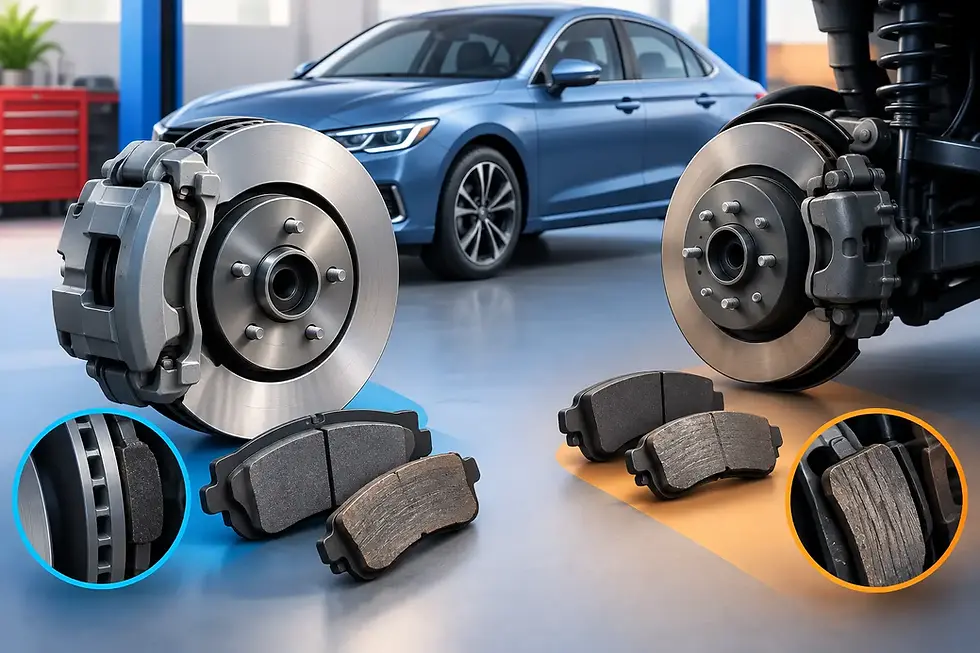
Brake pads are the replaceable friction material inside your brake calipers. When you press the brake pedal, hydraulic pressure pushes the pads against the rotors to create friction. That friction turns your vehicle's motion into heat and slows the wheels.
Rotors are the round metal discs mounted behind the wheels. The brake pads squeeze both sides of each rotor. Because rotors handle intense heat and repeated pressure, they must be thick enough, smooth enough, and properly balanced to do their job safely.
Think of pads as the part designed to wear down regularly. Rotors last longer, but they still wear over time. A brake job is not automatically pads only or pads and rotors every time. The right repair depends on the condition of both parts, your vehicle, and how it has been driven.
Why pads wear faster
Brake pads are made to sacrifice material during normal braking. City commuting, stop-and-go traffic, school drop-offs, heavy loads, and aggressive braking can all shorten their life. Many drivers get somewhere between 30,000 and 70,000 miles from a set of pads, but mileage is only a rough estimate.
Your driving habits matter more than a number on the odometer. A vehicle used mostly for highway travel may go longer between brake services than one driven daily through DFW traffic. Towing, carrying passengers, or driving a larger SUV or truck can also put more demand on the brakes.
Why rotors need attention too
Rotors lose a small amount of material every time the pads make contact. Heat cycles can also cause hot spots, glazing, cracks, rust buildup, or uneven surfaces. If a rotor becomes too thin, it cannot absorb and release heat as it should.
A worn or damaged rotor can reduce braking performance even if new pads are installed. It may also wear new pads unevenly, create vibration, or cause noise. That is why a proper brake inspection includes measuring the rotors, not just looking at the pads through the wheel.
Signs Your Brake Pads May Be Worn
A high-pitched squeal when braking is one of the most common warning signs. Many pads have a small wear indicator that contacts the rotor when the pad material gets low. It is meant to get your attention before metal begins grinding against metal.
Grinding is more urgent. It can mean the friction material is gone and the backing plate is contacting the rotor. Continuing to drive this way can damage the rotor quickly and make stopping less predictable.
Other signs include a brake warning light, reduced braking response, a soft pedal, or a vehicle that pulls to one side when you brake. Those symptoms are not always caused by pads. A brake fluid issue, sticking caliper, damaged hose, or suspension problem can create similar concerns. That is why guessing is not the best move when your brakes feel different.
Signs Your Rotors May Need Replacement
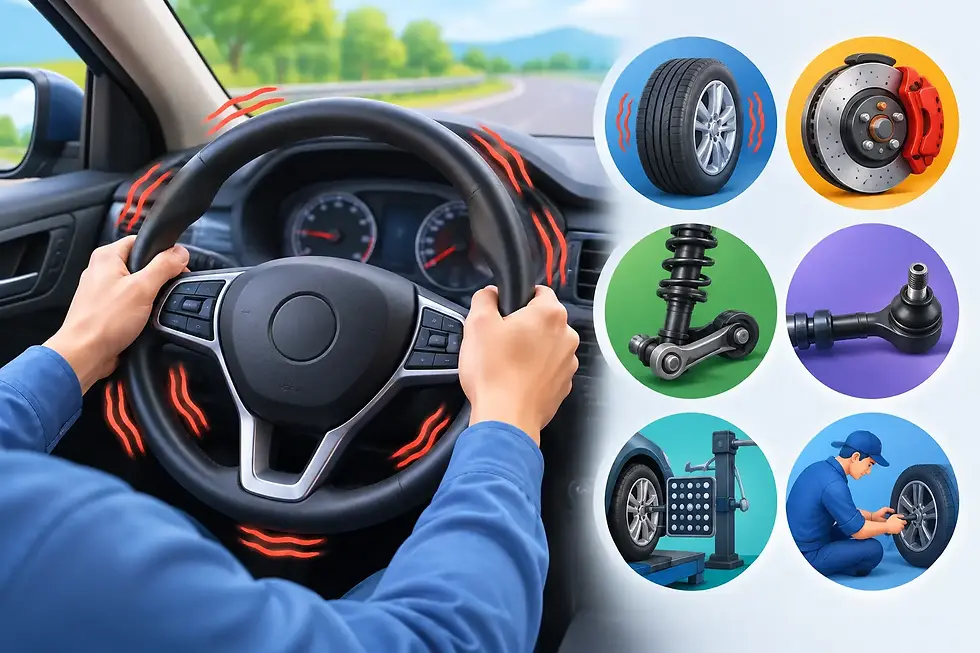
A steering wheel shake or brake pedal pulsation when slowing down often points to rotor trouble. Drivers sometimes call this “warped rotors,” but the issue may be uneven rotor thickness, excess runout, or deposits from overheated brake pad material. The important part is that the vibration needs to be diagnosed before parts are replaced.
Deep grooves, a heavily rusted braking surface, visible heat spots, or cracks are also red flags. Rotors can develop a lip around the outer edge as they wear, but appearance alone does not determine whether they are safe to reuse. A technician needs to compare rotor thickness with the manufacturer’s minimum specification.
If the rotor is at or below its discard thickness, replacement is the safe choice. If it has enough usable material and the surface condition allows it, resurfacing may be possible on some vehicles. In many modern brake jobs, replacing rotors is often more practical than machining them, especially when labor and part costs are considered. The answer depends on the specific vehicle and the actual measurements.
Do You Have to Replace Pads and Rotors Together?
Not always. If your rotors are within specification, smooth, and free of heat damage or excessive runout, new pads may be all you need. This can be a sensible repair when the braking system is otherwise in good shape.
However, replacing pads and rotors together is often recommended when rotors are worn, grooved, thin, corroded, or causing vibration. Installing fresh pads on damaged rotors can lead to noise, uneven pad wear, and reduced brake performance. It may save money today but create another brake visit sooner than expected.
There is also a safety and value consideration. Brakes work as a system. Quality pads need a proper rotor surface, calipers must move freely, hardware needs to be in good condition, and brake fluid must be at the right level and condition. Focusing only on the cheapest visible part can miss the cause of the problem.
What a Proper Brake Inspection Should Check
A quick look through the wheel is not a full brake inspection. To recommend the right repair, a technician should inspect pad thickness and wear patterns, then measure rotor thickness and check the braking surface. They should also inspect calipers, slide pins, brake hoses, hardware, and signs of fluid leaks.
Uneven pad wear matters. An inside pad may wear faster than an outside pad if a caliper slide is sticking. One wheel may wear faster than the other if a caliper is not releasing correctly. Replacing pads without fixing the underlying issue can leave you back with the same problem in a short time.
A road test may also be needed to confirm a vibration, pull, noise, or pedal issue. Some brake concerns are felt only under certain conditions, such as hard stops, high-speed braking, or when the vehicle has been sitting overnight.
How to Help Your Brakes Last Longer
You cannot prevent brake wear, but you can avoid premature wear. Leave more following distance so you can brake gradually instead of making repeated hard stops. Avoid riding the brake pedal on hills, and do not ignore a warning noise just because it comes and goes.
If your vehicle sits for long periods, surface rust can form on rotors, especially after rain or humid weather. Light rust may clear after a few normal stops. Heavy rust, grinding, or a brake that feels stuck deserves an inspection.
Also keep up with tire, alignment, steering, and suspension service. A vehicle that pulls, has uneven tire wear, or has worn suspension parts can be harder to control under braking. Safe stopping is about more than the brake pads alone.
When to Schedule Brake Service
Schedule an inspection soon if you hear squealing, feel vibration, notice grinding, see a brake warning light, or feel a change in how your vehicle stops. Do not wait for a minor noise to become metal-on-metal contact.
At JD Garage Auto Repair & Tires, we can inspect the complete brake system and explain what is worn, what is still serviceable, and what should be addressed now. You get a clear recommendation based on your vehicle's condition, not a one-size-fits-all parts package.
Your brakes have one job when traffic suddenly stops: help you stop with control. If something feels off, get it checked before your next commute, family trip, or long drive across DFW.


Comments