
Brake Noise Diagnosis: What That Sound Means
A brake squeal at the school drop-off line may be embarrassing. A grinding sound on the way to work is different - that is your vehicle telling you not to wait. Proper brake noise diagnosis separates normal, temporary sounds from brake problems that can affect stopping distance, damage expensive parts, or leave you with an unsafe vehicle.
Your brakes do not have to be completely worn out to make noise. Dust, moisture, worn pads, loose hardware, damaged rotors, and brake system issues can all create different sounds. The key is paying attention to when the noise happens, what it sounds like, and whether you also feel a change in the brake pedal or steering wheel.
What Different Brake Noises Can Mean
Brake sounds are clues, not final answers. The same squeak can have more than one cause, which is why a visual inspection and road test matter. Still, knowing the common patterns can help you decide whether you can schedule service soon or need to stop driving and have the vehicle checked right away.
High-pitched squealing or squeaking
A sharp squeal when you press the brake pedal often points to worn brake pads. Many pads include a small wear indicator designed to make noise when the friction material gets low. It is a warning meant to get your attention before the pad wears into the rotor.
That said, a brief squeak does not always mean your pads are finished. Morning moisture, light surface rust after rain, brake dust, or certain pad materials can make noise for the first few stops. If it goes away quickly and braking feels normal, it may not be urgent. If the squeal continues every day, gets louder, or happens with normal braking, schedule an inspection.
Grinding or metal-on-metal noise
Grinding is the sound drivers should take seriously. It can mean the brake pad material is gone and the metal backing plate is contacting the rotor. Continuing to drive can quickly turn a pad replacement into pads, rotors, and possibly caliper repairs.
Grinding can also come from debris caught near the rotor or a damaged brake component. Either way, do not assume it will clear up on its own. Limit driving and have the brakes inspected as soon as possible.
Scraping, rubbing, or a sound that changes with speed
A light scraping sound that happens even when you are not pressing the brakes may come from a bent dust shield touching the rotor. A small rock can also become trapped in the brake area. These issues are often less severe than grinding, but they still need to be checked because the sound can mask a more serious problem.
If the scraping gets louder when turning, changes with vehicle speed, or comes with a hot wheel, it may not be only a brake issue. A wheel bearing, suspension component, or stuck brake caliper may be involved.
Clicking, clunking, or rattling
A click or clunk when braking, especially at low speed, can point to loose brake hardware, pads moving in the bracket, or worn suspension and steering parts. It may also happen when shifting from reverse to drive because the brake pads settle in a different direction.
This kind of noise should not be ignored simply because the vehicle still stops. Parts that are loose or worn can affect how consistently the brakes apply and may cause uneven wear over time.
Pulsing, shaking, or vibration while braking
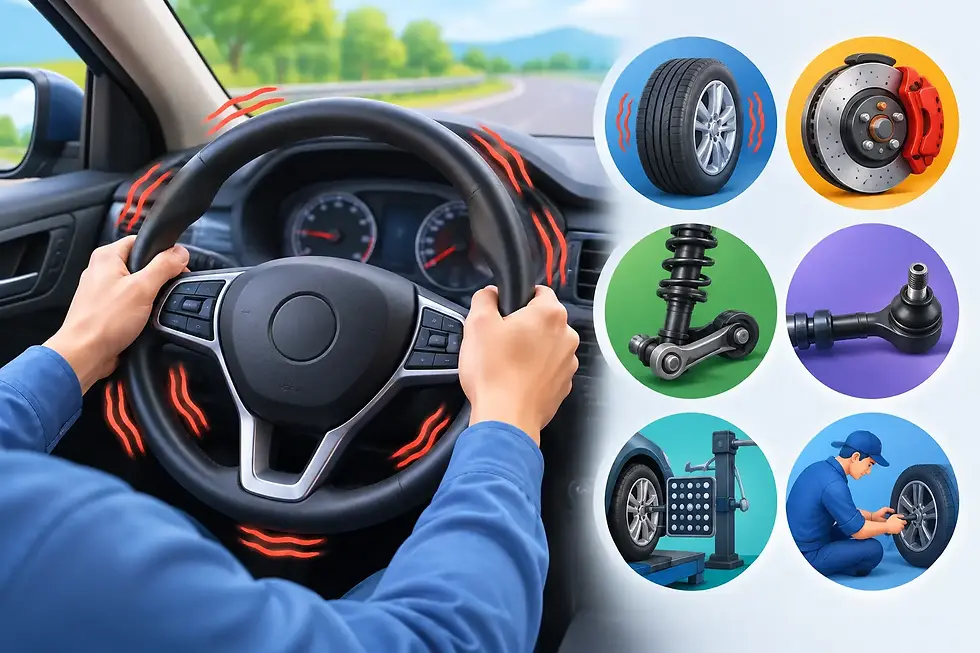
If the steering wheel shakes or the brake pedal pulses when you slow down, the issue may involve uneven rotor surfaces, rotor runout, or a problem with the brake system applying unevenly. Drivers often call this “warped rotors,” but the exact cause needs to be measured rather than guessed.
Heat is usually part of the story. Repeated hard braking, towing, mountain driving, a sticking caliper, or improperly installed brake parts can all lead to vibration. A technician should inspect the rotors, pads, calipers, and related hardware before recommending repairs.
Brake Noise Diagnosis Starts With the Right Questions
A good brake inspection is more than looking through the wheel spokes. A technician needs to know what the vehicle is doing on the road. Before you bring it in, notice whether the sound happens during light braking, hard braking, backing up, turning, or cruising without the brake pedal pressed.
Also pay attention to where the sound seems to come from. A front-end squeal and a rear-end clunk can lead the inspection in different directions. If the brake pedal feels soft, the vehicle pulls left or right, a brake warning light comes on, or you smell something burning, mention that right away.
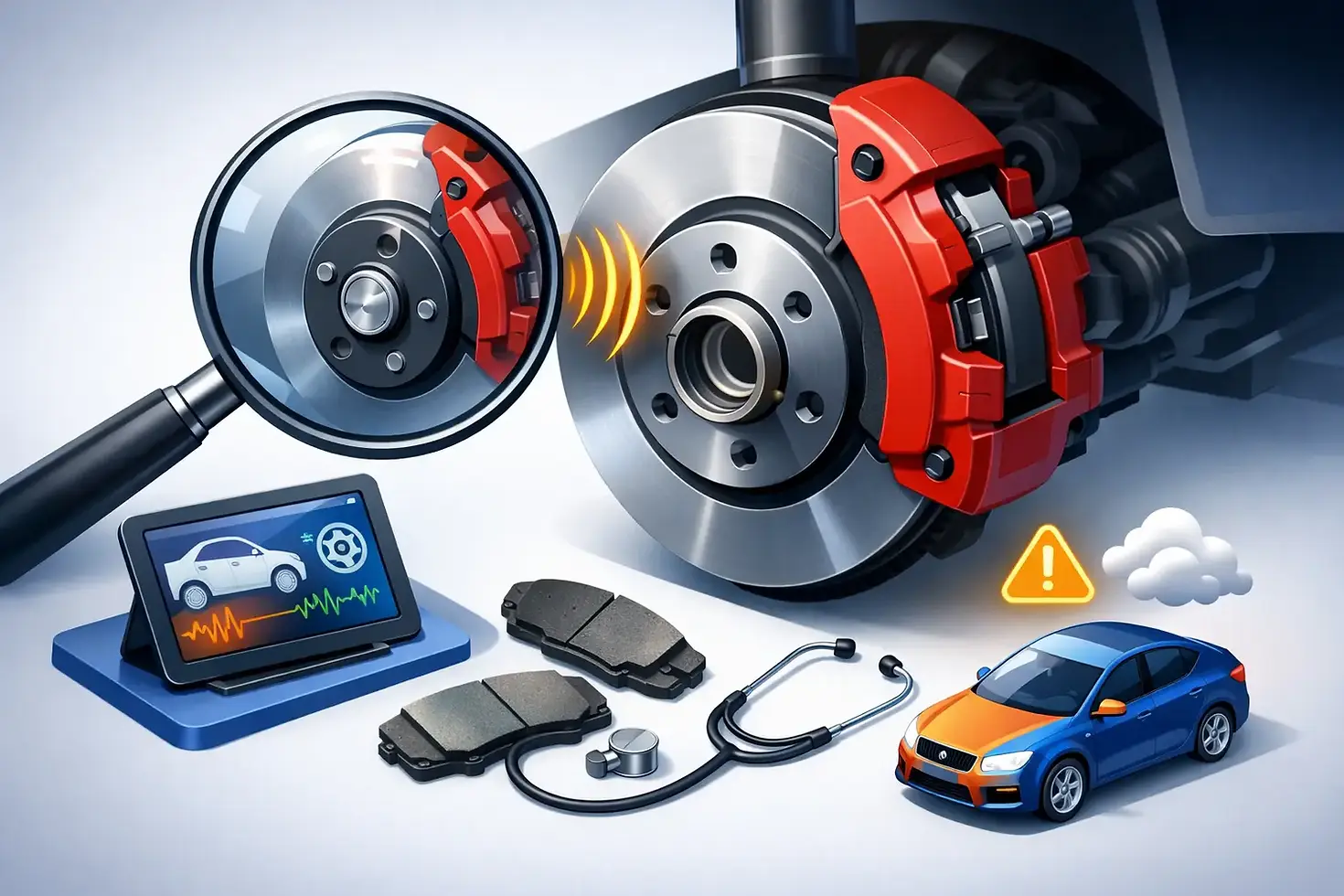
At the shop, brake noise diagnosis may include a road test, pad thickness measurement, rotor inspection, hardware inspection, and a check of the calipers, hoses, brake fluid condition, and parking brake components. On some vehicles, electronic parking brake systems and brake sensors also need to be considered. The goal is to identify the cause, not replace parts based on a sound alone.
When Brake Noise Is an Emergency
Some brake noises can wait for an appointment. Others should change your plans immediately. Stop driving and arrange for service if you hear heavy grinding, the brake pedal goes soft or sinks, the vehicle pulls hard during braking, you see brake fluid leaking, or a wheel smells hot or produces smoke.
A brake warning light also deserves prompt attention. On many vehicles, a red brake light can indicate low brake fluid, a parking brake issue, or a hydraulic brake system concern. If it stays on after the parking brake is released, do not treat it like a reminder light.
The same goes for a vehicle that needs noticeably more distance to stop. You know how your car normally feels. If braking suddenly feels weak, unpredictable, or uneven, it is safer to have it checked than to hope the next stop is better.
Why Waiting Can Cost More
Brake repairs are often most affordable when the problem is caught early. Replacing worn pads before they damage the rotors is usually simpler than waiting until metal-on-metal contact has worn grooves into the rotor surface. A sticking caliper caught early may save a rotor, pads, and tire from heat damage.
There is also a safety side that matters more than the repair bill. Your brakes are used in traffic, at stoplights, on wet roads, and when another driver makes an unexpected move. Noise is not always a crisis, but it is a reason to pay attention before you need maximum stopping power.
Regular maintenance helps too. During tire rotations, oil changes, and scheduled inspections, brake wear can often be spotted before a warning noise starts. This is especially helpful for commuters, families with multiple vehicles, and drivers who spend time in DFW traffic where frequent stop-and-go driving wears brake components faster.
What to Tell Your Brake Technician
Clear details can speed up the diagnosis. Tell the shop whether the noise is constant or occasional, whether it began after rain or after recent brake work, and whether it happens only when the brakes are hot or cold. Mention any vibration, pulling, warning lights, burning smells, or changes in pedal feel.
Avoid spraying lubricants or brake cleaners around the brakes as a quick fix. Some products can contaminate the pads and rotors, creating more noise and reducing braking performance. Likewise, do not assume a quiet brake system is automatically healthy. Brake wear can be uneven and some components fail without making much sound.
At JD Garage Auto Repair & Tires, the focus is on checking the complete brake system, explaining what is causing the problem, and recommending the repair your vehicle actually needs. Whether the issue is a simple pad replacement or a more involved brake repair, getting answers early helps keep your vehicle dependable.
The next time you hear an unfamiliar brake sound, do not turn up the radio and hope it disappears. Make a note of when it happens, drive cautiously, and get it checked before a small warning becomes the reason your car cannot stop the way it should.


Comments